Friday, February 8, 2013

LANAP Periodontal Laser Treatment


Robert D. Follweiler D.D.S., P.A. Periodontology and Laser Technology
Creating and Maintaining Foundations of Oral Health
901 East Ocean Boulevard Stuart Florida 34994 772-283-1400-    Email   PerioF1@BellSouth.net 


                                                                     Please visit our web site www.Follweilerperio.com

_____________________________________________________________________________________

                                         Save your teeth with LANAP Periodontal Laser Treatment

If you suspect you have periodontal problems (gum disease) and are at risk for losing teeth please STOP and take some time to entertain another possibility. There is a relatively new (8-10 years) type of periodontal treatment that may save teeth that were thought to be hopelessly involved and this treatment does not require scalpel (cutting) and stitches. It’s called LANAP or Laser Assisted New Attachment Procedure periodontal therapy and is the only laser treatment of this kind approved by the FDA for treatment of periodontal disease. 

Here is how it works:  1. Instead of cutting away infected gum tissue the Millennium PerioLase Laser uses a hair like beam of light to seek out and destroy the bad bacteria that causes periodontal disease. 2. A specialized ultra sonic scaler removes the tartar that lies deep inside the gum pocket and then the pocket is sterilized and sealed by the laser. (3)This seal forms a barrier that does not allow bacteria to re- enter the area. New gum attachment fibers and bone are allowed to regenerate and stabilize the teeth.  Up to 90% of LANAP patients have no reoccurrence of periodontal disease for up to five years after completion of treatment. http://www.youtube.com/watch?v=w502q-C6l2M

LANAP is a patient friendly approach to periodontal therapy and the investment is often less than what it would cost to place an implant.  This laser procedure is the latest technological advance and results in little or no discomfort, bleeding and down time from work. LANAP embraces saving teeth , avoids removing gum tissue to rid the mouth of bacterial infection and is much safer for patients who have additional medical complications. Patients who take blood thinning and osteoporosis medicines that might not be able to have traditional periodontal treatment also greatly benefit from this procedure.  

Periodontal disease is an inflammatory process that has been linked to heart and lung disease. Scientist now understand that inflammation causes or complicates many diseases including diabetes, pancreatic cancer and Alzheimer’s disease. For example, inflammation can damage tissues in the brain which can increase a patient’s risk for Alzheimer’s disease. Inflammation from gum disease has also been linked to arthritis.  Over sixty percent of the population has some form of periodontal disease. To find out if you are a candidate for LANAP it only takes a brief and painless evaluation. 
 Please call the office for more information.

Tuesday, February 5, 2013

Bruxism…. What a Grind!!!!

 Robert D. Follweiler D.D.S. P.A.
             Periodontology and Laser Technology                             
  901 East Ocean Boulevard   Stuart, FL 34994 772-283-1400


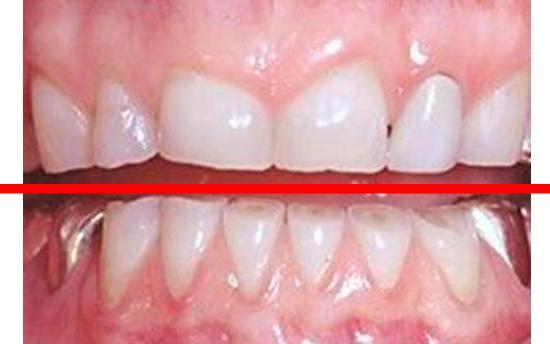
Bruxism (pronounced BRUK-sizm) is the term for grinding and clenching of teeth. It    usually happens at night, during sleep, although some people clench and grind their teeth during the day. People who suffer from bruxism may also bite their fingernails, chew on pencils or bite the inside of their lips or cheeks. Children as well as adults suffer from bruxism. Most children outgrow bruxism before they get their adult teeth.


Symptoms of bruxism may be: jaw or facial tenderness, headaches or earaches, teeth that have become sensitive to cold or pressure, indentations in the cheeks or tongue and tips of teeth that appear flattened. Frequently a parent or sleep partner may be aware of the grinding even if the person who is doing the grinding and clenching is unaware. Very often a dental professional is responsible for notifying their patient that they are clenching and grinding their teeth.


Doctors do not completely understand the causes of bruxism.  In some adults abnormal tooth alignment is thought to be the cause of bruxism. This is called malocclusion.  More often psychological factors such as stress, anxiety and suppressed anger or frustration cause bruxism. Aggressive, competitive or hyperactive personality types are also more likely to clench and grind their teeth. Caffeine, nicotine and other drugs such as amphetamines and cocaine increase the risk of bruxism. Bruxism may also be an uncommon side effect of some psychiatric medications including antidepressants. In some cases clenching and grinding isn’t caused by dental problems or stress but may be a complication of other health problems such as Huntington’s disease or Parkinson’s disease.


So what can you do if you suspect you may be suffering from bruxism? The first thing to do is to make an appointment with your dentist. Your dental professional will exam your mouth for signs of bruxism such as  unusual wear of your teeth, red and inflamed tissues inside the mouth, broken dental restorations, tooth sensitivity, tender jaw muscles and poor tooth alignment.   X-rays may be taken to see if the bruxism has damaged the underlying bone that supports the teeth. Finally, your dentist will offer suggestions for treatment such as adjusting your bite or fabricating a bite guard that can be worn to protect your teeth from the nightly grind. There is more information available.


To learn more please call our office or visit our web site – www.Follweilerperio.com


Saturday, February 2, 2013

A Bright White Smile


Robert Follweiler D.D.S.    Periodontology       
901 East Ocean Boulevard   Stuart,  FL 34994   772-283-1400


Patients ask us everyday about teeth bleaching. It appears that white teeth are now another symbol of youth and attractiveness. Believe it or not folks have been trying to lighten their teeth for over 100 years. Tooth whitening procedures were first documented in dental literature in 1872.  Although everyone would like to achieve that movie star smile there are a few things to keep in mind when it comes to whitening your smile. 

First and foremost is to have realistic expectations. While tooth bleaching creates white smiles, people are sometimes disappointed with the results. Many people expect their teeth to be as white as copy paper after the procedure. Even with the most favorable outcome your teeth cannot approach this degree of whiteness. Teeth this white look unnatural.  The best results are achieved when the shade you select fits your overall look and coloring.

The second thing that you should be aware of is the type of staining and discoloration that you are attempting to remove. There are two main reasons for stained or darkened teeth. One is extrinsic, (from the outside) and the other is intrinsic (from the inside).
 
Extrinsic stains are the yellow to brown discolorations that result from years of consuming highly colored beverages, (coffee, tea & wine) smoking or poor oral hygiene. Discoloration can also be the result of the aging process and thinning of the enamel.  This type of staining usually responds well to the various types of bleaching techniques.
 
Beaching is often less predictable in situations where the origin of the stain comes from within. These stains can be the result of trauma, congenital abnormalities (situations you are born with) and medications such as tetracycline. Understanding the origin of the stain will help form realistic expectations.

Finally, it is important to become an informed consumer. Learn about the various types of bleaching techniques that are available.  There are four basic methods of whitening your teeth; in office power bleaching, laser bleaching, take home dentist supervised bleaching and over the counter bleaching systems. The two main categories of bleaching agent are peroxide- based whitening and nonperoxide based stain removal.

The in office power bleaching uses a powerful light source and a bleaching agent. The lips, gums, and inside of your mouth are isolated to protect them from the chemical agent used.  This process takes about 1-2 hours. The laser bleaching takes about the same amount of time as the power bleaching but a laser is the light source that activates the bleaching agent.
 
The take home dentist supervised bleaching systems uses custom made trays that fit very snuggly over the teeth. The bleaching agent is loaded in the trays and can be worn for a few hours or overnight. This system requires 2-3 weeks to achieve the desired response. 

 Several over the counter bleaching systems are also on the market. One type of bleaching system comes as a kit with trays (one size fits all) and bleaching agent included. This technique also requires 2-3 weeks to whiten the teeth. There are also paint on gels, whitening strips and whitening toothpaste. Many of the over the counter methods have not undergone the same amount of testing that the professionally recommended products have and their results may vary quite a bit. 

There are several precautions to take before you bleach your teeth. First, remember that the bleaching agent will NOT lighten your fillings and crowns. Talk to your dentist before bleaching if your have fillings and crowns that will show when you smile.

Next, remember that these bleaching agents can make your teeth and gums very sensitive.  Usually this sensitivity is only temporary. If you have sensitive teeth talk to your dentist before you proceed.
 
Finally, according to the American Academy of Dentistry, bleaching has not been proven to be harmful to your teeth and gums. No matter what technique you chose to get that “Hollywood Smile”, even if you use over the counter products, have a dentist examine your mouth before you begin a program.  With proper planning a bright white smile may be just right for you!


Please call our office with any questions.     Dr. Robert Follweiler D.D.S.   772-283-1400


Friday, February 1, 2013

Do I Really Need A Dental Hygiene Appointment?


The list of things that a person needs to attend to in a day seems endless. There is never enough time for everything and frequently a visit to the dentist is not the first priority. So how important is maintenance care on a regular basis?


To answer this question one might think about the purpose of a routine visit to the dentist office.  Of course everyone expects to leave the dental office with bright shining teeth that feel fresh and clean. But did you know that clean teeth are just a small part of your dental checkup?


When you have an appointment with the dentist or the dental hygienist quite a bit is accomplished during the visit.  First, your dental health care provider usually updates your health history and inquires about any changes in your health or  your medications. Any changes in your general health or medications often are seen in your mouth.  Next, a thorough examination of your teeth is performed checking for decay, cracked or loose fillings, and loose bridgework. The hygienist also looks for loose teeth or any ill fitting dental appliances.


 Next, your mouth is thoroughly examined for any signs of rash, blisters, ulcers or sores. The gum tissues are examined to see if there is any significant redness, bleeding or exudate (pus) that would indicate signs of periodontal disease, a bacterial infection of your gum tissues. Your tongue is examined on the top as well as underneath. The dentist or hygienist looks down the back of your throat and on the roof of your mouth. All the tissues of your mouth are also checked for any suspicious white or gray patches that may require further examination in the form of a soft tissue biopsy. 


 According to the American Dental Academy, more than 30,000 new cases of oropharyngeal (mouth) cancer are reported each year. This disease kills about 8,000 U.S. citizens annually, making it more deadly than cervical cancer, malignant melanoma, and Hodgkin’s disease. The American Dental Academy also states that tobacco use and excessive alcohol consumption are major risk factors for oral cancer, but about 25% of victims neither smoke nor drink. For this reason a thorough oral cancer screening is an extremely important aspect of every dental check-up.


After the initial examination of your mouth the hygienist might suggest that x-rays should be taken. A x-ray is an important diagnostic tool for dentists to detect diseases of the mouth and face that escape detection by other diagnostic methods.  Patients sometimes express concern about dental x-rays because of fear of radiation exposure. Federal, state and local agencies have set strict safety standards for x-ray equipment.  Dental x-ray technology is now so sophisticated that a patient’s head and neck exposure is very minimal. Your dental professional can protect you by taking only necessary x-rays, using equipment that restricts the beam to a specific area, and using a protective lead apron with high speed film. Without the use of x-rays small cavities between the teeth, abscesses, cysts, tumors and other diseases may be impossible to detect before serious damage occurs. The Journal of the American Dental Association cites the use of the wide angle or panoramic dental radiograph (x-ray) as an innovative diagnostic tool in the detection of critically clogged neck arteries. Approximately 730,000 strokes occur each year in the United States. According to the National Stroke Association, half of these strokes result from atherosclerotic plaques (build up of cholesterol plaque and other fatty deposits in the arteries) found in the carotid artery.  Over a lifetime, strokes touch four out of five American families.  The use of the panoramic x-rays enables the dentist to see calcifications that may indicate a cause for concern. It is very important that every patient have a panoramic x-ray screening at some point as determined by the dentist.


Finally, health care providers have scientifically established that there is a definite

mouth - body connection. An unhealthy mouth may be a sign of an unhealthy body. Researchers have proven that there is a link between periodontal disease and heart disease,  respiratory disease,  stroke, diabetes, pregnancy problems, and osteoporosis.  Early detection is the key in preventative medicine and dentistry. Small problems are much easier and less expensive to resolve. So the next time you are thinking, do I really need to have my teeth cleaned, think about what is happening at these visits.  A dental hygiene visit is so much more than smooth clean teeth. This visit is all about prevention, early detection, and wellness. The choice is up to you!


For further information please call the office of Dr. Robert Follweiler  @ 772-283-1400


Friday, January 25, 2013

Care Givers are at Risk for Periodontal Disease!


               Robert D. Follweiler D.D.S., P.A.
         Periodontology and Laser Technology
                901 East Ocean Boulevard
        Stuart, Florida 34994
772-283-1400
               Please visit our Web Site @ Follweilerperio.com

 Care givers are at risk for
 periodontal disease!


Many patients in our office have fallen into the roll of caregiver for family members with dementia, Alzheimer’s disease or other debilitating ailments.  Patients who once regularly flossed and brushed their teeth have found the time they use to have for themselves has been greatly reduced. Caregivers are under increased stress on several levels. They have less time for nutritious meals, exercise and thorough oral hygiene. In a study from the Journal of Periodontology, caregivers are often under great psychological or physical stress and should not overlook their oral health. According to Fernando N. Hugo, DDS “These findings support the health impact of psychological risk factors from chronic stress, which may lead to malfunction of some biological functions.”

Findings published in the Archives of General Psychiatry, are the latest from a quarter-century- long body of research aimed at unraveling the link between increased stress and weakened immunity. This prolonged stress on the immune system may also promote a “chronic inflammation” that has been suggested as one key biological mechanism that may fuel  age related diseases such as heart disease, diabetes, arthritis and certain types of cancers.

Chronic inflammation may also contribute to periodontal disease.  A study of adults aged 50 years or older revealed that being a caregiver to relatives with dementia, or other stress related syndromes can result in elevated levels of plaque and gingival bleeding for the caregivers.  Periodontal disease can take hold when a persons’ immune system breaks down. Periodontal disease is an inflammatory process that destroys the gum and bone surrounding the teeth.


The best course of action for caregivers is to be aware of the stress involved in long term care of a family member. Try not to become lax with your homecare and keep regularly scheduled appointments with your  and periodontist.  There is a link between stress and immune system weakness. Take care of yourself so that you will have ability to take care of others.

Please call the office with any questions or concerns.


Tuesday, January 22, 2013

Are Your Medications Making Your Mouth Sick?


                       Are Your Medications Making Your Mouth Sick?


What medications did you take this morning? Did you know they might be creating problems in your mouth? Your medicine cabinet may hold the answer to some of your oral health problems. Drugs that improve the health of one part of your body may have a detrimental affect on your mouth. Being aware and informed may prevent needless discomfort and expense down the road.

For example, over 400 medications produce a condition called xerostomia, or dry mouth that can be damaging to gum tissues. Other drugs may cause gingival enlargement, which means the gums become swollen and begin to grow over the teeth. Swollen gums can be painful, unsightly, and interfere with speech, eating and everyday brushing and flossing.

Medications with sugar as the main ingredient, like cough syrups and cough drops, may increase plaque as well as the tendency for plaque to adhere to your teeth .  Parents may notice that children’s medications and chewable medications in general, are made more palatable by the additions of more sugar. This sugar may be listed in the ingredients as sucrose, glucose or fructose. These sugars may significantly increase plaque production and increase the risk of cavities as well as periodontal disease. When shopping for lozenges, chewable tablets and syrups look for those that are sugar-free. Never put children to bed after having administered these medications without having them at least rinse their mouth with water. The same precaution is true for adults.

Drugs that induce dry mouth include those for high blood pressure, spastic bladder syndrome, pain relief, anti anxiety and allergy medications. People with dry mouth have a tendency to accumulate more plaque and experience changes in their gum tissue that can make them more susceptible to periodontal disease and tooth decay. Drugs that may cause gingival enlargement and overgrowth include calcium channel blockers, medication used for seizure control and anti organ rejection drugs. Over grown gums make it easier for bacteria to accumulate and attack supporting structures of the teeth, which can lead to severe periodontal problems.  When taking these medications diligent homecare and frequent visits to the dentist are very important because gingivitis may act as a predisposing factor to gingival over growth.  A recent study in the Journal of Periodontology suggests that frequent dental visits following initial periodontal treatment may significantly reduce gingival overgrowth in patients taking blood pressure medication .  The study found that gingival overgrowth recurrence was eliminated in more than half of the patients with a combination of initial periodontal therapy followed by more frequent dental visits (every three months).

Just as you should inform your physician of the medications you are presently taking, be just as careful to inform your dental professional. Make sure to include over the counter and herbal supplements as well. Your dental professional can talk to you about what effects these products may be having on your oral health. He may  consult with your physician about possible alternatives and answer questions or concerns you may have.  With this information, you, your physician and your dental professional can all work together to minimize the negative effects of any medications you may be taking and prevent discomfort and unnecessary treatment in the future.


Please call our office for more information.

Saturday, January 19, 2013

Gum Recession


Robert D Follweiler D.D.S., PA
Periodontal Disease and Laser Technology
901 East Ocean Boulevard
Stuart, Florida 34994   772-283-1400


            Gum Recession Really is That Important!  


Did you know that many patients think that gum recession is a just natural part of aging?
Do you think that gum recession just makes your teeth more sensitive to hot and cold?
Receding gum tissue always means more than just more exposed tooth surface. It can be a sign of a greater problem, periodontal disease that can result in tooth loss and a low-grade bacterial infection in your body. Because we all have immune systems that function at different levels this chronic infection can be a greater health risk than you may realize.

Warning signs such as bleeding, tender and swollen gums, persistent bad breath, as well as pus between your teeth and gums is the main indications of periodontal disease to most people. Periodontal disease can affect one tooth or many teeth. It begins when the bacteria in the plaque (the sticky, colorless film that constantly forms on your teeth) causes the gums to become irritated and inflamed.  Periodontal disease causes the gums to separate from the teeth and creates an avenue for bacteria to enter.   Often times patients are not aware that gum recession may be a sign of periodontal disease that goes untreated because it is perceived as harmless.

Gum recession occurs for reasons such as smoking, improper tooth brushing, tooth position, oral dermatitis, improper dental restorations, genetics and periodontal disease. Gum recession almost always involves more than loss of gum tissue. The most significant part of gum recession is that it involves the loss of the bone supporting the teeth. Without adequate bone support your teeth may become loose and have to be extracted.


So when you look in the mirror and notice any type of gum recession stop and think about it. Gum recession causes more than just    sensitive teeth and a cosmetic result that may be displeasing.   Gum recession does not just occur in older adults it occurs in some younger people as well. Look for the warning signs of periodontal disease and report them to your periodontist or dentist. Gum recession is important and worthy of your attention.


For more information please call our office.